































































Trailer couplers are one of the most essential components in any towing system, acting as the critical connection point between a trailer and a towing vehicle. A strong, reliable coupler ensures safe transport, stable handling, and secure load transfer under various road conditions. Whether used in marine transport, construction, agriculture, or recreational towing, selecting the right coupler is vital for safety and performance.
Among the most commonly searched and used terms in the towing industry are heavy duty trailer coupler, boat trailer coupler, trailer coupler types, trailer couplers for sale, different types of trailer couplers, and aluminum trailer coupler. Each of these represents a specific category or feature of coupler design, reflecting the wide variety of towing applications in modern transportation.
Understanding how couplers work and how different designs impact towing performance helps users choose the right equipment for their needs while ensuring long-term durability and safety.
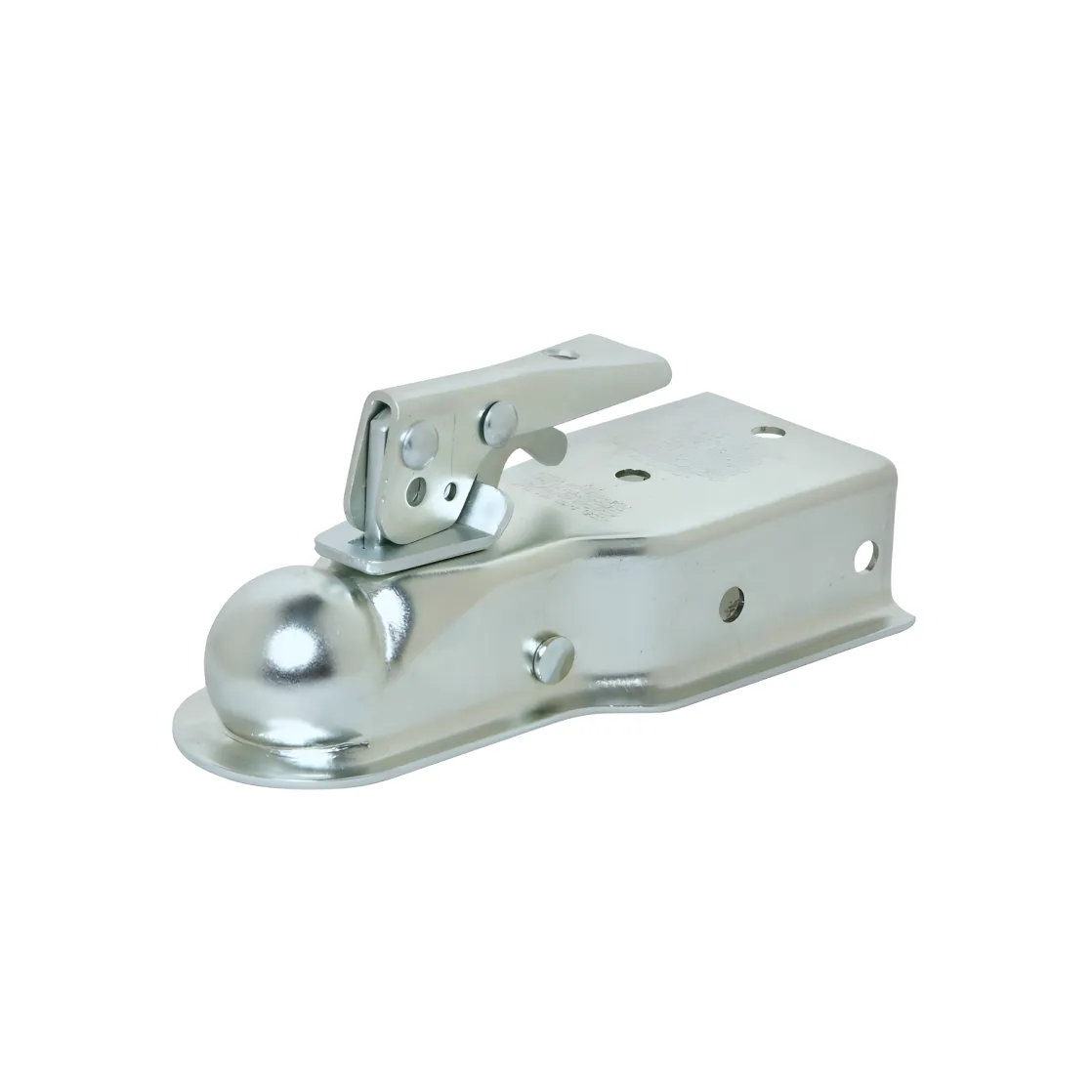
A heavy duty trailer coupler is designed to handle large loads, high tongue weight, and demanding towing environments. It connects the trailer tongue to the hitch ball of a towing vehicle, locking securely in place while allowing controlled articulation during movement.
The main functions of a coupler include:
Securely attaching trailer to vehicle
Allowing vertical and horizontal movement
Supporting tongue weight
Maintaining alignment during towing
Preventing accidental detachment
A heavy duty trailer coupler is typically constructed from forged steel or reinforced cast materials to withstand extreme stress. These couplers are commonly used on utility trailers, equipment haulers, car carriers, and industrial trailers where load safety is critical.
One of the most popular applications is the boat trailer coupler, which is specifically designed for marine environments. Because boat trailers are frequently exposed to water, salt, and corrosion, these couplers often feature galvanized or stainless steel finishes. A high-quality boat trailer coupler ensures smooth launching and retrieval of boats while resisting rust and long-term environmental damage.
Marine towing places unique demands on coupler design. Unlike standard trailers, boat trailers are frequently submerged in water during loading and unloading. As a result, corrosion resistance and sealing performance are critical features of a reliable boat trailer coupler.
Another key factor in coupler performance is load capacity. A properly rated heavy duty trailer coupler must match or exceed the trailer’s gross trailer weight (GTW). Undersized couplers can lead to mechanical failure, while oversized designs may add unnecessary weight and cost.
Couplers also contribute to towing stability. A secure connection reduces trailer sway, improves braking response, and enhances overall vehicle control. This is especially important for high-speed highway towing or heavy equipment transport.
Modern couplers are engineered with safety features such as:
Locking latches
Safety pin systems
Quick-release mechanisms
Adjustable height compatibility
These features improve usability while ensuring that the coupler remains securely attached during transit.
There are many trailer coupler types, each designed for specific towing applications, weight capacities, and hitch systems. Understanding the differences between these types helps users choose the most suitable option for their trailer setup.
Some of the most common different types of trailer couplers include:
Straight couplers
A-frame couplers
Adjustable couplers
Sleeve-lock couplers
Gooseneck couplers
Pintle hook couplers
Quick-latch couplers
Each design serves a different purpose depending on trailer size, load requirements, and towing environment.
A straight coupler is one of the simplest and most common designs, typically used for light to medium-duty trailers. It connects directly to the trailer tongue and works with standard hitch balls. This type is widely available among trailer couplers for sale in retail and industrial markets.
A-frame couplers are designed specifically for trailers with A-frame tongues. They provide strong structural support and are often used in utility trailers and RV applications. Their triangular mounting structure improves load distribution and strength.
Adjustable couplers offer flexibility in height settings, making them ideal for users who tow multiple trailers or use different towing vehicles. This versatility makes them a popular choice in commercial transport operations.
For extremely heavy-duty applications, pintle hook couplers are commonly used. These are frequently seen in military, construction, and industrial environments where maximum strength and articulation are required. Pintle systems allow greater movement range and are highly resistant to rough terrain stress.
Gooseneck couplers are another specialized design, typically used for livestock trailers, horse trailers, and large equipment haulers. These couplers mount inside a pickup truck bed and provide superior stability and higher load capacity compared to traditional ball couplers.
Among modern materials, the aluminum trailer coupler has become increasingly popular due to its lightweight and corrosion-resistant properties. Aluminum couplers are ideal for applications where weight reduction is important without sacrificing strength.
An aluminum trailer coupler is especially useful in marine environments, recreational towing, and light commercial trailers. While not as strong as forged steel in extreme heavy-duty applications, aluminum offers excellent durability-to-weight ratio and resistance to rust.
The choice of coupler type directly affects towing safety and performance. Selecting the wrong coupler can lead to instability, increased wear, or even catastrophic failure during towing. Therefore, matching coupler type to trailer application is essential.
When searching for trailer couplers for sale, buyers must consider several key factors to ensure they select the right product for their needs. These factors include weight capacity, material, hitch compatibility, and environmental conditions.
One of the first considerations is load rating. Every coupler has a maximum tongue weight and gross trailer weight rating. A properly selected heavy duty trailer coupler should always exceed the expected load to ensure a safety margin.
Material selection is another important factor. Steel couplers are known for maximum strength and are widely used in industrial and commercial applications. However, they are heavier and may require protective coatings to prevent corrosion.
In contrast, an aluminum trailer coupler provides lightweight performance and excellent corrosion resistance. This makes it ideal for boat trailers and light-duty recreational trailers. However, aluminum may not be suitable for extremely heavy loads where steel is preferred.
Environmental conditions also play a major role in coupler selection. For marine environments, a boat trailer coupler with galvanized or stainless steel construction is essential to prevent rust caused by constant water exposure. In dry land applications, standard steel couplers may be sufficient.
Another important consideration is compatibility with the towing vehicle. Different trailer coupler types require different hitch ball sizes and mounting configurations. Ensuring proper compatibility reduces wear and improves towing safety.
Ease of use is also a factor for many buyers. Quick-latch and adjustable designs simplify trailer hookup and reduce setup time. This is especially valuable for users who frequently connect and disconnect trailers.
Durability and maintenance requirements should also be evaluated. High-quality couplers require minimal maintenance but should still be regularly inspected for wear, cracks, and locking mechanism performance. Lubrication of moving parts helps extend lifespan and ensures smooth operation.
When browsing trailer couplers for sale, it is important to choose reputable manufacturers that follow industry safety standards. Certified couplers undergo load testing, material inspection, and quality control processes to ensure reliability under real-world conditions.
As towing technology continues to evolve, modern couplers are becoming more advanced, incorporating improved locking systems, anti-corrosion coatings, and precision-engineered designs. These improvements enhance safety, reduce maintenance, and improve overall towing efficiency.
Whether used in industrial transport, recreational boating, agriculture, or construction, components such as heavy duty trailer coupler, boat trailer coupler, trailer coupler types, trailer couplers for sale, different types of trailer couplers, and aluminum trailer coupler remain essential to safe and efficient towing operations. Choosing the right coupler ensures long-term durability, improved stability, and maximum safety on the road.



Copyright © 2026 Hebei Minmetals Co., Ltd. All Rights Reserved. Sitemap | Privacy Policy | Top Blog丨Menu